


When and Why You Must Consider Changing Your DSD System
Direct Store Delivery (DSD) has long been a cornerstone distribution model. DSD involves suppliers or manufacturers delivering products directly to retail stores, bypassing traditional warehouses or distribution centers. This approach is particularly common for perishable goods such as dairy, baked goods, beverages, and high-turnover consumer products, where speed and freshness are critical. However, as business needs evolve, technology advances, and market demands shift, sticking with an outdated DSD System can hinder efficiency and profitability. But when exactly should you consider a change, and why? In this article, I explore the key indicators, benefits, and timing for upgrading or overhauling your DSD System.
Understanding the DSD System: A Quick Overview
Before diving into changes, it is essential to clarify what a DSD system entails. At its core, DSD streamlines the supply chain by enabling direct shipments from suppliers to stores, reducing handling time and costs. This model contrasts with centralized distribution, in which products flow through retailer warehouses. DSD is ideal for items requiring special handling, such as fragile or oversized products, or those with short shelf lives. Modern DSD systems often incorporate software for route planning, inventory tracking, invoicing, and analytics, making them more than just a delivery method—they’re integrated operational tools.
The Hidden Cost of Staying on an Outdated DSD System
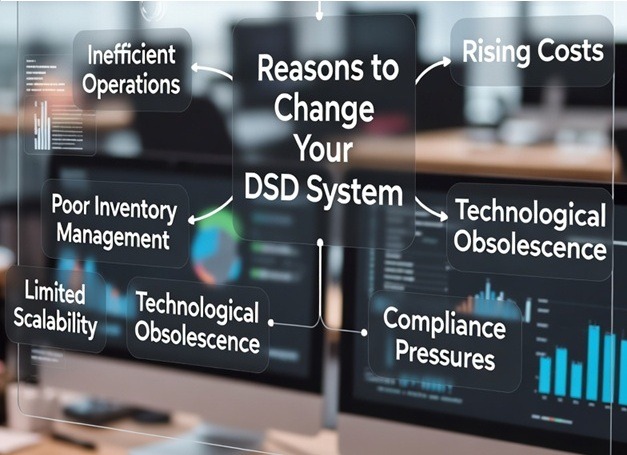
Most companies delay system changes because the current platform “still works.” Orders are processed, invoices are printed, and trucks go out every day. But beneath the surface, outdated DSD systems quietly create:
- Revenue leakage through pricing errors and missed charges
- Inventory distortion between routes, warehouse, and accounting
- Compliance risks with expiration tracking and traceability
- Manual workarounds that grow headcount without improving control
- Poor visibility into route performance and customer profitability
These issues rarely appear as a single crisis. Instead, they slowly erode margins, cash flow, and customer trust, until growth becomes chaos.
Why Change Your DSD System? The Compelling Benefits
Upgrading or switching your DSD system isn’t about fixing what’s broken; it’s about unlocking new potential. Here’s why businesses are making the shift:
Enhanced Efficiency and Cost Savings: Modern DSD software automates route planning, invoicing, and sales tracking, reducing manual errors and operational costs. For example, AI can optimize truckloads to minimize fuel use and empty miles, directly impacting the bottom line. Companies like British American Tobacco have seen improved visibility and reduced delays after digitizing their DSD processes.
Better Inventory and Demand Forecasting: Advanced systems use AI and real-time data to predict demand, preventing stockouts and overproduction. This is especially valuable for perishable items, where freshness directly affects sales.
Improved Customer and Retailer Relationships: Direct control over deliveries allows for personalized merchandising and faster response to store needs. Upgraded systems enable field teams to upsell or address issues on-site, boosting satisfaction.
Adaptability to Market Changes: With eCommerce growth and shifting consumer preferences, flexible DSD systems integrate with third-party logistics (3PLs) for hybrid models. This evolution ensures DSD remains viable rather than obsolete.
Data-Driven Insights: New tools provide analytics on driver performance, competitive intelligence, and market trends, empowering strategic decisions.
When to Make the Change: Timing Is Everything
Timing your DSD system upgrade strategically can maximize ROI and minimize disruptions. Consider these scenarios:
- During Business Expansion: If you’re scaling operations, adding stores, or entering new markets, integrate changes early to avoid bottlenecks.
- After Performance Audits: Conduct regular reviews of your supply chain. If metrics like delivery accuracy or waste levels are declining, act promptly.
- In Response to Tech Advancements: With 2026 seeing widespread adoption of AI and cloud-based DSD software, upgrade when your competitors do to stay ahead.
- Post-Disruption Events: Events like supply chain crises or regulatory changes (e.g., sustainability mandates) often expose weaknesses, making it an ideal time for overhaul.
- Budget Cycles: Align changes with fiscal planning, ensuring you have resources for training and implementation.
In essence, changing your DSD system transforms it from a logistical necessity into a strategic asset.
Conclusion
Direct Store Delivery remains a powerful model in 2026, but clinging to outdated systems can erode its benefits. If you’re facing inefficiencies, scalability issues, or missed opportunities due to outdated tech, your business for future growth in an increasingly digital retail landscape. Whether through software modernization or model tweaks, the right DSD evolution can deliver lasting competitive advantages.
At LaceUp Solutions, we explore how technology transforms distribution, from warehouse management and route optimization to digital sales enablement. Subscribe to the LaceUp Blog for weekly insights on wholesale growth, innovation, and the future of logistics. For more information, please get in touch with us to learn about our solutions.
I hope this article have been helpful. I will continue to post information related to management, distribution practices and trends, and the economy in general. Our channel has a lot of relevant information. Check out this video on Reasons Why You Need a DSD Software.
Sorry, the comment form is closed at this time.