

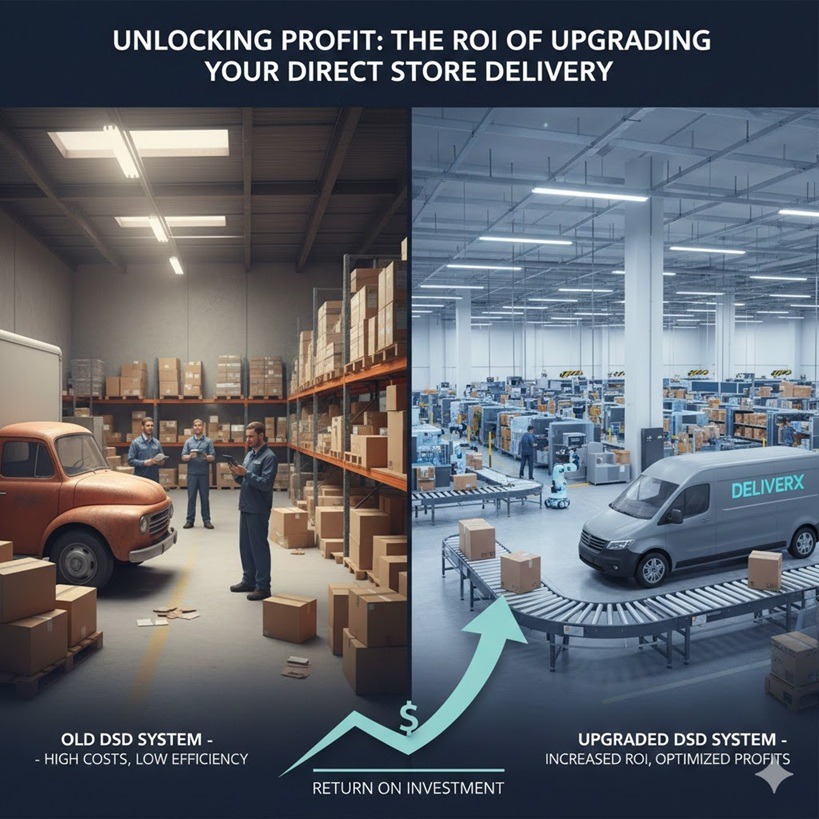
A ROI Analysis of Upgrading your Outdated DSD System with a More Advanced One
In our last article, we acknowledged the operational warning signs of an outdated DSD system (Direct Store Delivery), the next logical question is financial: Is the investment really worth it? For most distributors, upgrading a DSD platform is not just an IT improvement, it is one of the highest-impact operational investments available. A modern system affects revenue, costs, inventory, labor productivity, and cash flow simultaneously. To illustrate this, in this article, I present an analysis of a hypothetical (but realistic) ROI scenario based on average mid-size distributor metrics.
Profile of the Hypothetical Distributor
To build a meaningful example, assume a mid-size distributor with:
- Annual Revenue: $18 Million
- Routes: 28
- Drivers: 32
- Warehouse Personnel: 18
- SKUs: 2,500
- Average Gross Margin: 24%
The company currently operates on an outdated DSD system with limited integration to accounting and warehouse operations.
Current Financial Leakage Caused by an Outdated DSD System
Even when operations “seem functional,” several hidden inefficiencies reduce profitability.
Revenue Leakage from Pricing and Execution Errors: Without automated pricing enforcement and promotion validation:
- Missed charges
- Incorrect discounts
- Unauthorized price overrides
Estimated impact: 0.75% of annual revenue
$18,000,000 × 0.75% = $135,000/year
Lack of real-time reconciliation between route inventory and warehouse stock causes:
- Write-offs
- Expired product
- Shortages and overages
Estimated reduction with modern DSD: 15–25%
Assume current shrink: $220,000/year
Recoverable savings: $44,000/year
Excess Administrative Labor: Manual reconciliation, credit processing, and data entry consume back-office hours. Typical improvement with automation:
- 1–2 FTE reduction or reassignment
Estimated annual savings: $55,000
Route Productivity Loss: Without optimized routing and real-time decision support:
- Extra stops
- Excess fuel
- Lower drop count per day
Modern DSD typically improves productivity by 5–12%.
Estimated net operational savings: $70,000/year
Total Annual Recoverable Value
| Area | Annual Impact |
| Revenue Leakage Reduction | $135,000 |
| Inventory Control Improvement | $44,000 |
| Administrative Efficiency | $55,000 |
| Route Optimization | $70,000 |
| TOTAL ANNUAL BENEFIT | $304,000 |
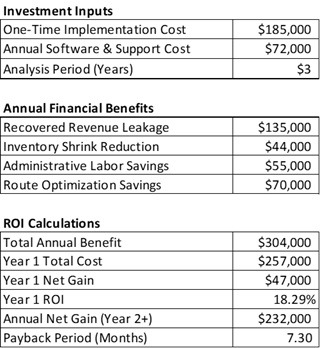
DSD Investment Scenario & ROI Calculation
Conclusion
Upgrading an outdated DSD system is not simply a technology refresh; it is a financial optimization initiative. In this hypothetical case, a mid-size distributor recovers over $300,000 annually, achieves positive ROI in the first year, and generates over 300% ROI in subsequent years. The real risk is not the investment itself; it is continuing to operate with a system that silently drains revenue, efficiency, and visibility every single day.
At LaceUp Solutions, we explore how technology transforms distribution, from warehouse management and route optimization to digital sales enablement. Subscribe to the LaceUp Blog for weekly insights on wholesale growth, innovation, and the future of logistics. For more information, please get in touch with us to learn about our solutions.
I hope this article about ROI for upgrading an outdated DSD system have been helpful. I will continue to post information related to management, distribution practices and trends, and the economy in general. Our channel has a lot of relevant information. Check out this demo of a DSD Software.
Sorry, the comment form is closed at this time.