

Migrating Siloed Systems: Best Practices Integrating Mobile DSD, WMS, and ERP
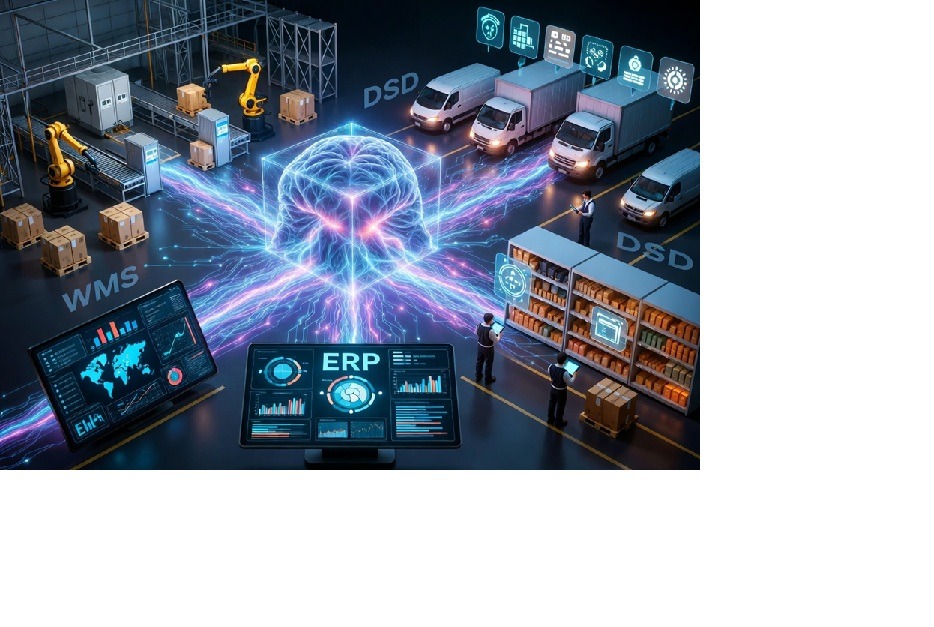
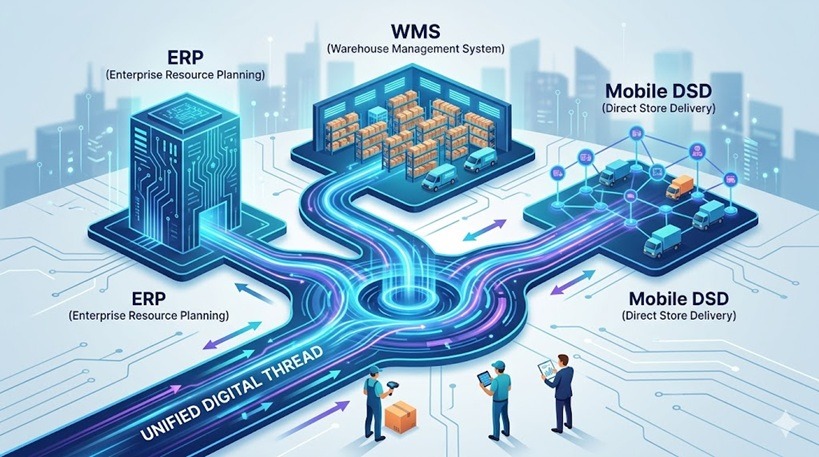
Many distributors still operate with fragmented systems: a mobile Direct Store Delivery (DSD) app for route execution, a Warehouse Management System (WMS) for inventory control, and an ERP for financials and accounting, each functioning independently. While this setup may have worked in the past, it creates inefficiencies, data inconsistencies, and missed optimization opportunities. As distribution becomes more data-driven and real-time, integrating these systems is no longer optional; it is a strategic necessity. In this article, I outline best practices for successfully migrating from siloed systems to a fully integrated ecosystem connecting Mobile DSD, WMS, and ERP.
Understanding the Systems and the Cost of Silos
ERP serves as the central nervous system for the business. It manages finance, sales orders, procurement, forecasting, and high-level inventory planning.
WMS focuses on warehouse execution: receiving, put-away, picking, packing, shipping, and real-time inventory tracking at the bin or pallet level.
Mobile DSD equips field teams (drivers, sales reps) with apps for route optimization, on-site order entry, invoicing, payments, signatures, and vehicle inventory management, critical for industries like beverages, food service, and consumer packaged goods (CPG).
The Problem with Siloed Systems
Operating disconnected systems often leads to:
- Inventory discrepancies between warehouse, trucks, and accounting
- Manual data entry and duplication of effort
- Delayed financial visibility (sales vs. collections vs. returns)
- Inefficient route execution due to lack of real-time inventory data
- Complex reconciliation processes, especially when dealing with large retailers
For example, a DSD driver may complete a route and generate invoices, but if returns or adjustments are not synchronized with the ERP, the accounting team must manually reconcile discrepancies—creating delays and increasing the risk of errors.
What Integration Really Means
True integration goes beyond simple data exchange. It requires:
- Real-time synchronization of transactions and inventory
- Unified data models across systems
- Automated workflows spanning warehouse, delivery, and finance
- End-to-end visibility from receiving to final payment
An integrated ecosystem ensures that every action, whether it is a pick in the warehouse, a sale on a route, or a payment posted in the ERP, updates the entire system instantly.
Best Practices for a Successful Siloed Systems Migration
A successful migration requires more than technology: it demands careful planning, data discipline, and people-focused execution. Follow these proven steps.
1. Conduct Thorough Assessment and Define Clear Objectives
Start with a cross-functional audit involving warehouse, field sales, IT, finance, and operations teams. Map current data flows, pain points, and transaction types (e.g., DSD route sales, returns, partial deliveries, inventory adjustments). Align integration goals to business outcomes such as “reduce stock discrepancies by 95%” or “cut order processing time by 50%.” Secure executive sponsorship early to drive adoption.
2. Cleanse and Standardize Data
Poor data quality is the top reason integrations fail. Audit and duplicate master data (SKUs, locations, customers, units of measure) across all three systems. Establish a single source of truth—typically the ERP for master records—and map fields meticulously. For DSD, ensure mobile apps handle offline scenarios with automatic sync upon re connection.
3. Enable Real-Time or Near Real-Time Synchronization
Batch uploads at the end of the day are no longer sufficient. Best practice involves Sync inventory movements immediately after picking and loading; Sync sales and collections in real time from mobile devices; and Sync returns and adjustments instantly to avoid discrepancies. This is critical for Accurate truck inventory, Real-time credit checks, and Preventing overselling.
4. Adopt a Phased Migration Approach
Avoid “big bang” risks. Use a pilot: integrate one warehouse and a single DSD route first. Test core flows (order hand off from ERP to WMS to DSD, route close-out syncing back to ERP). Measure against success metrics before scaling. Parallel running (old and new systems side-by-side) during transition minimizes disruption.
5. Test Rigorously and Validate End-to-End
Simulate real-world scenarios: peak volumes, network outages, partial shipments, returns, and exceptions. Perform bi-directional reconciliation testing to ensure inventory and financial data stay consistent. Involve end users (warehouse staff and DSD drivers) in user acceptance testing (UAT). Document edge cases thoroughly.
6. Invest in Change Management and Training
Technology alone doesn’t drive results, people do. Communicate benefits clearly (e.g., “No more end-of-day paperwork”). Provide role-specific training: mobile app usage for drivers, exception handling for warehouse teams, and reporting for managers. Offer ongoing support and quick-reference guides. Celebrate early wins to build momentum.
Common Pitfalls to Avoid in Siloed Systems Migration
- Treating integration as an IT project instead of an operational transformation
- Ignoring warehouse processes when focusing on DSD
- Underestimating data cleansing efforts
- Failing to train users on new workflows
- Not planning for scalability (future growth, new channels, EDI requirements)
Conclusion
Migrating from siloed systems to an integrated environment connecting Mobile DSD, WMS, and ERP is one of the most impactful transformations a distributor can undertake. It requires more than connecting systems; it demands aligning processes, data, and people. By following best practices such as defining a single source of truth, enabling real-time synchronization, and designing for real-world exceptions, companies can unlock significant efficiency gains and operational visibility. In a competitive distribution landscape, integration is not just about efficiency; it is about building a scalable, resilient, and future-ready operation.
At LaceUp Solutions, we explore how technology transforms distribution, from warehouse management and route optimization to digital sales enablement. Subscribe to the LaceUp Blog for weekly insights on wholesale growth, innovation, and the future of logistics. For more information, please get in touch with us to learn about our solutions.
I hope this article about a successful WM implementation have been helpful. I will continue to post information related to management, distribution practices and trends, and the economy in general. Our channel has a lot of relevant information. Check out this demo of a Sales Rep App.
Sorry, the comment form is closed at this time.