


Why Change DSD Part 4: What a Successful DSD Implementation Actually Looks Like
In this final installment of our Direct Store Delivery (DSD) series, we have examined the triggers for change, the potential ROI from modernization, and how to select vendors without costly pitfalls. Now, let’s shift focus to the endgame: what does a truly successful DSD implementation deliver? Beyond checklists and demos, success manifests in transformed operations, measurable gains, and sustained competitive advantages. In this article, I explain what a successful DSD Implementation truly looks like in practice, from operations to finance to leadership visibility.
Defining Success: Key Outcomes of a Strong DSD Implementation
A successful rollout isn’t just “going live”; it is achieving and sustaining improvements across efficiency, revenue, and adaptability. Here’s what it looks like in practice:
- Rapid Payback
and Clear ROI: Implementations often
pay for themselves in 6-12 months. For instance, distributors adopting modern
route accounting and AI optimization report 10-40% efficiency gains through
reduced mileage, fuel savings (up to 20%), and labor productivity. One beverage
distributor saved significant fleet costs while boosting reorder rates by 30%
after ditching spreadsheets.
- Operational Efficiency Gains: Route Optimization & Delivery Performance: AI-driven planning cuts delivery times by 10-15% and mileage by 10-20%. On-time delivery rates climb to 95%+, with real-time tracking minimizing delays.
- Inventory & Waste Reduction: Real-time visibility slashes stockouts by 50% and waste (especially perishables) by 5-10%. Predictive forecasting prevents overstocking.
- Labor & Process Automation: Mobile apps eliminate paper invoicing and manual checks, freeing drivers to focus on merchandising and upselling. Teams handle more stops per day without added headcount.
- Revenue and Customer Impact: Faster shelf replenishment and better merchandising drive sales uplifts of 5-15%. PepsiCo noted 15% sales increase from a quicker market response via DSD. Retailers benefit from fresher products and consistent stocking, strengthening partnerships.
- Team Adoption and Morale Intuitive tools reduce frustration: drivers love offline-capable apps, managers gain dashboards for insights. High adoption (90%+) comes from thorough training and change management, turning skeptics into advocates.
- Scalability and Future-Proofing Cloud-based systems handle growth seamlessly, integrating with ERP, eCommerce, or 3PLs. Sustainability features (e.g., reduced empty miles) align with 2026 regulations.
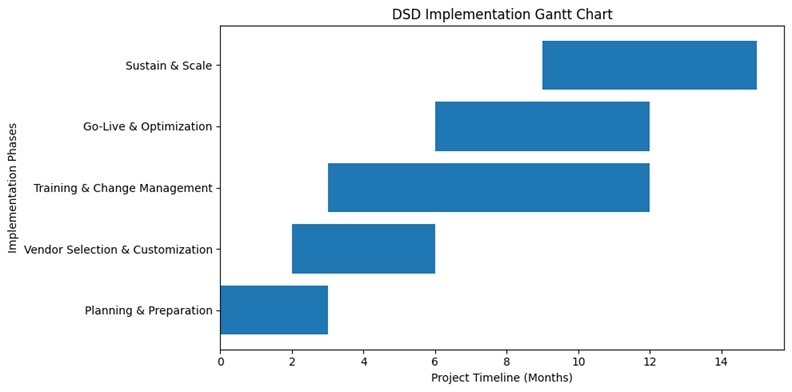
The Roadmap to Getting There: Phases of a Successful DSD Implementation
Successful projects follow a phased, people-first approach:
- Planning & Preparation (1-3 Months): Define goals, map processes, secure executive buy-in, and form a cross-functional team (IT, ops, sales, drivers).
- Vendor Selection & Customization (2-4 Months) Pilot with real data, customize for your workflows (e.g., offline mode for rural routes), and integrate with existing systems.
- Training & Change Management (Ongoing) Hands-on sessions for all users, phased rollout (start with one region), and feedback loops. High adoption is key—celebrate early wins.
- Go-Live & Optimization (3-6 Months Post-Launch) Monitor KPIs (delivery accuracy, fuel use, sales per stop). Fine-tune routes and features based on data.
- Sustain & Scale Regular audits, updates for new AI features, and expansion to more routes or products.
The graph below illustrates the process.
The Hallmarks of a Failed Implementation
Even top implementations face hurdles: resistance to change, integration snags, or data migration issues. But winners address them proactively:
- Involve end-users early to build buy-in.
- Start small (pilot routes) to prove value.
- Use data dashboards to demonstrate quick wins (e.g., first-month fuel savings).
Just as a counter view, it is worth stating clearly what failure looks like:
- Heavy reliance on spreadsheets post-go-live
- Ongoing manual inventory adjustments
- Users bypassing the system
- Leadership losing confidence in reports
These are not user problems. They are implementation failures.
Conclusion
If you have followed this series, from recognizing the need to change DSD system, calculating ROI, choosing vendors, to now seeing the finish line, you are equipped to pursue your own transformation. The distributors thriving today did not just upgrade software; they upgraded how they serve retailers and consumers. The question isn’t whether DSD modernization pays off; it’s how soon you can start reaping those rewards.
At LaceUp Solutions, we explore how technology transforms distribution, from warehouse management and route optimization to digital sales enablement. Subscribe to the LaceUp Blog for weekly insights on wholesale growth, innovation, and the future of logistics. For more information, please get in touch with us to learn about our solutions.
I hope this article about DSD Implementation have been helpful. I will continue to post information related to management, distribution practices and trends, and the economy in general. Our channel has a lot of relevant information. Check out this video on DSD returns.
Sorry, the comment form is closed at this time.