

The Future of Convenience Stores Distribution: New Product, New Customers, New Opportunities
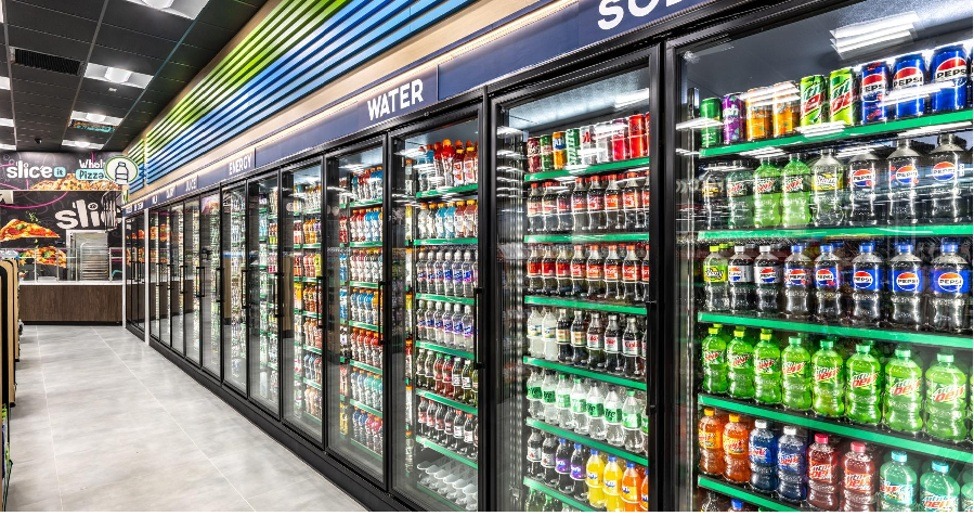
Walk into Convenience Stores today and compare it with the same store ten years ago. The beverage cooler is longer and more crowded; the snack wall has new brands that didn’t exist a few years ago; a prepared-food counter has appeared near the register; and the person at the door is often shopping for something very different from a pack of cigarettes and a tank of gas. The channel is changing quickly, and the distributors who supply it have to change with it. This article looks at what is driving that change, how new products and new shoppers are reshaping demand, and what a distributor needs to do to turn a changing channel into growth instead of a moving target.
Convenience Stores Are Becoming More Important Food Destinations
According to the National Association of Convenience Stores (NACS), U.S. convenience store foodservice and merchandise sales reached $341.2 billion in 2025, an increase of 1.7% over the previous year. Foodservice accounted for 28.5% of in-store sales and 38.9% of in-store gross profit dollars. Packaged beverages represented another 18.7% of in-store sales. These figures highlight an important shift: convenience stores are competing not only with traditional retailers but increasingly with quick-service restaurants and other food outlets. For distributors, this means serving a retail channel where product freshness, availability, variety, and delivery reliability are becoming increasingly important.

New Product Categories Create Distribution Opportunities
Traditional beverages and snacks remain essential, but convenience stores are expanding their offerings to attract different customer needs. Energy drinks, hydration beverages, protein-oriented snacks, ready-to-eat meals, and other specialty products create opportunities for distributors to introduce new brands and expand their customer relationships. NACS reported that alternative snacks, including jerky, seeds, and nuts, experienced a 7.9% sales increase in 2025. However, not every new product will succeed in every location. A convenience store near a university may have different purchasing patterns than one serving commuters or a residential neighborhood. Distributors that understand these differences can help retailers select products that match local demand, rather than offering the same assortment to every customer.
More Products Mean More Distribution Complexity
A broader product assortment can increase sales opportunities, but it also introduces operational challenges. More SKUs require additional inventory management, warehouse space, picking accuracy, and truck capacity. Products may also have different replenishment requirements. Fast-moving beverages need frequent deliveries, while slower-moving specialty products require careful inventory control. Consider a distributor introducing 20 new beverage SKUs across 100 convenience stores. That creates 2,000 potential store-product combinations to monitor. Not every store will carry every item, but the example illustrates how quickly assortment complexity can increase. Without accurate sales and inventory information, distributors risk overstocking slow-moving products while running out of their best sellers.
Why Direct Store Delivery Becomes More Valuable to Convenience Stores
Direct Store Delivery offers an important advantage in this changing environment: flexibility. Instead of relying on large, infrequent shipments, distributors can replenish individual stores based on their sales patterns and storage limits. A high-volume location may require several deliveries per week, while another store can operate efficiently with fewer visits. DSD sales representatives can also help retailers introduce products, evaluate assortment performance, and identify merchandising opportunities. This makes the distributor more than a transportation provider. It becomes a commercial partner helping retailers respond to changing customer demand.
Technology Helps Distributors Adapt
As convenience stores diversify, distributors need better visibility into what each customer purchases, how frequently products move, and which items generate returns or stockouts. Modern DSD software helps coordinate mobile order entry, customer-specific pricing, inventory information, deliveries, and route accounting. Integration with warehouse and accounting systems can improve visibility across the distribution process. With reliable sales information, managers can evaluate product performance, identify purchasing patterns, and make better decisions about assortments and replenishment. Technology also helps distributors manage the additional complexity of serving more products and customers without relying entirely on manual processes.
Conclusion
The convenience channel is not shrinking. It is changing shape, with growth moving inside the store, new products arriving constantly, and new customers appearing in new formats. The distributors that benefit treat change as normal: they introduce products carefully, read results quickly, and make it easy for any customer to order. Those that wait for the market to settle may find it never does.
At LaceUp Solutions, our B2B Wholesale Ecommerce and Scan-based Trading Software help distributors bring new products and new customers into the same system, with the flexibility convenience retailers expect. Subscribe to the LaceUp Blog for weekly insights, or contact us to see how LaceUp can help your sales team turn every stop into a growth conversation.
I hope this article has been helpful. I will continue to post information related to management, distribution practices and trends, and the economy in general. Our channel has a lot of relevant information. Check out this video about What is Route Optimization.
Sorry, the comment form is closed at this time.