

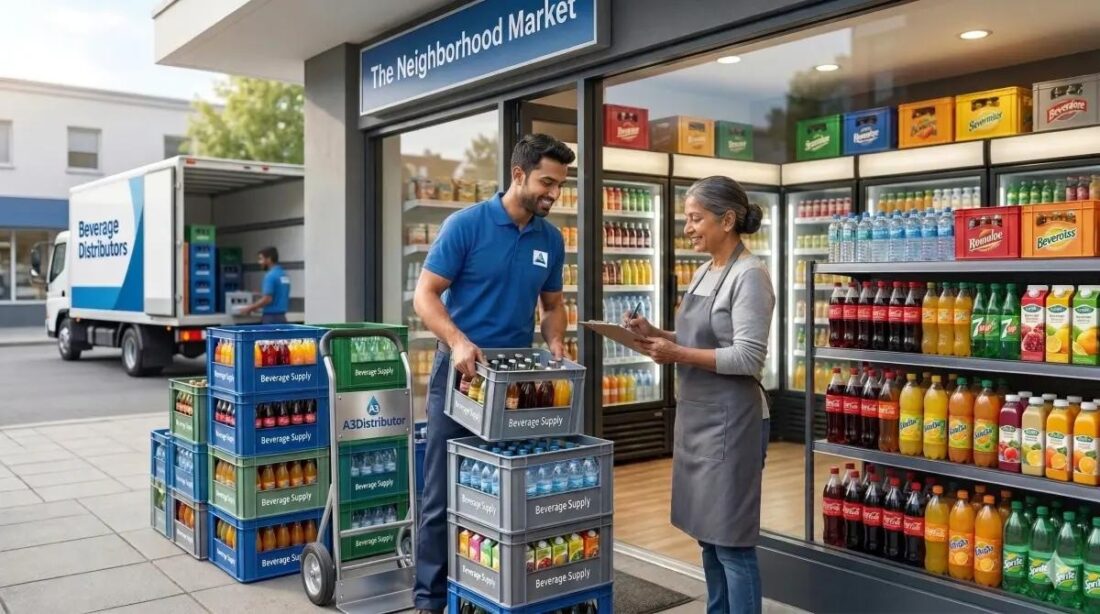
The Small Store Opportunity: Why Independent Retailer Still Matter in DSD
Supermarket chains attract considerable attention from food and beverage distributors. Their purchasing volumes, extensive store networks, and brand recognition make them attractive commercial accounts. But focusing exclusively on large retailers can mean overlooking an important market: independent retailers, neighborhood groceries, small supermarkets, and specialty retailers. For many distributors, these businesses represent an opportunity to expand market coverage, build lasting customer relationships, and generate recurring sales. In this article, I look at how large the independent retailers segment still is, why DSD fits it so well, what makes small accounts hard to serve profitably, and what a distributor needs in place to turn those accounts into a growth engine instead of a cost problem.
A Large Market Made Up of Small Independent Retailers
Independent retail remains a significant part of the American retail landscape. According to the National Association of Convenience Stores (NACS), the United States had 151,975 convenience stores at the end of 2025, with approximately 63% operated by companies owning ten or fewer stores. This illustrates an important market characteristic: despite the visibility of national chains, smaller operators still represent a substantial share of convenience retail. For distributors of beverages, snacks, dairy products, frozen foods, and other consumer goods, this fragmented market offers opportunities that large retail chains cannot always provide. Independent stores may purchase smaller quantities, but their combined demand can represent meaningful business.
Small Orders Can Become a Significant Business
Consider a distributor serving 150 independent retailers, each purchasing an average of $400 per week. That’s $60,000 in weekly sales, or about $3.12 million annually. This is an illustrative example, not an industry benchmark. Of course, sales volume alone does not guarantee profitability. Serving 150 customers involves transportation, sales visits, order processing, and administrative expenses. The opportunity depends on organizing these activities efficiently. When stores are geographically concentrated, distributors can develop delivery routes that serve multiple customers within the same area, reducing unnecessary travel and improving productivity.
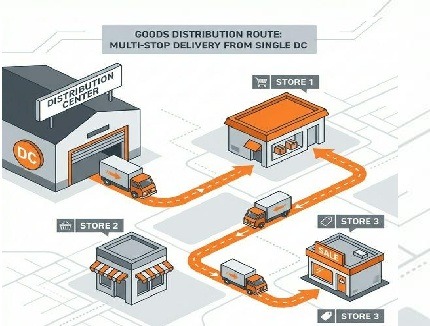
The objective is not simply to add more small accounts. It is to build a profitable network of recurring customers.
The Commercial Advantage of Personal Relationships
Independent retailers frequently offer something that large chains cannot: direct access to the decision-maker. A DSD sales representative may interact regularly with the store owner, discussing product demand, new items, promotions, and customer preferences. These conversations create opportunities to introduce additional products, improve assortment decisions, and respond quickly to local market changes. For example, a distributor may learn that several neighborhood stores are seeing growing demand for functional beverages or specific snack categories. That information can help identify opportunities across similar accounts. Strong customer relationships can also improve retention and make the distributor a preferred supplier. In independent retailers, reliable service and personal attention can be important competitive advantages.
Technology Makes Small Retail Distribution Scalable
The main obstacle to expanding Independent Retail Distribution is operational complexity. Managing hundreds of smaller customers requires accurate order capture, efficient routes, customer-specific pricing, inventory visibility, and reliable delivery records. Without integrated systems, the administrative effort can grow faster than sales. Modern DSD software helps distributors coordinate these activities.
Mobile sales applications support order entry, customer information, and product availability. Route management tools help organize deliveries, while route accounting supports invoicing, returns, collections, and truck inventory reconciliation. Digital B2B ordering can also make routine replenishment more convenient for retailers. Together, these capabilities help distributors expand their customer networks without depending on equally large increases in administrative resources.
Conclusion
Independent stores are not a shrinking corner of the market. They are a large, loyal, underserved segment that rewards distributors who show up consistently and add real value. The challenge is economics: small orders can be expensive to serve unless every step is fast and every account is understood. Distributors that get this right turn their smallest customers into a durable advantage, built on relationships that bigger competitors find hard to copy.
At LaceUp Solutions, our Route Management Software, Sales Rep App, and Order Entry Software help DSD distributors keep every stop fast, accurate, and profitable, from the largest account to the corner store. Subscribe to the LaceUp Blog for weekly insights, or contact us to see how LaceUp can help your sales team turn every stop into a growth conversation.
I hope this article on Independent retailers has been helpful. I will continue to post information related to management, distribution practices and trends, and the economy in general. Our channelhas a lot of relevant information. Check out this video about Ways Distributors Can Increase Sales Dramatically.
Sorry, the comment form is closed at this time.