

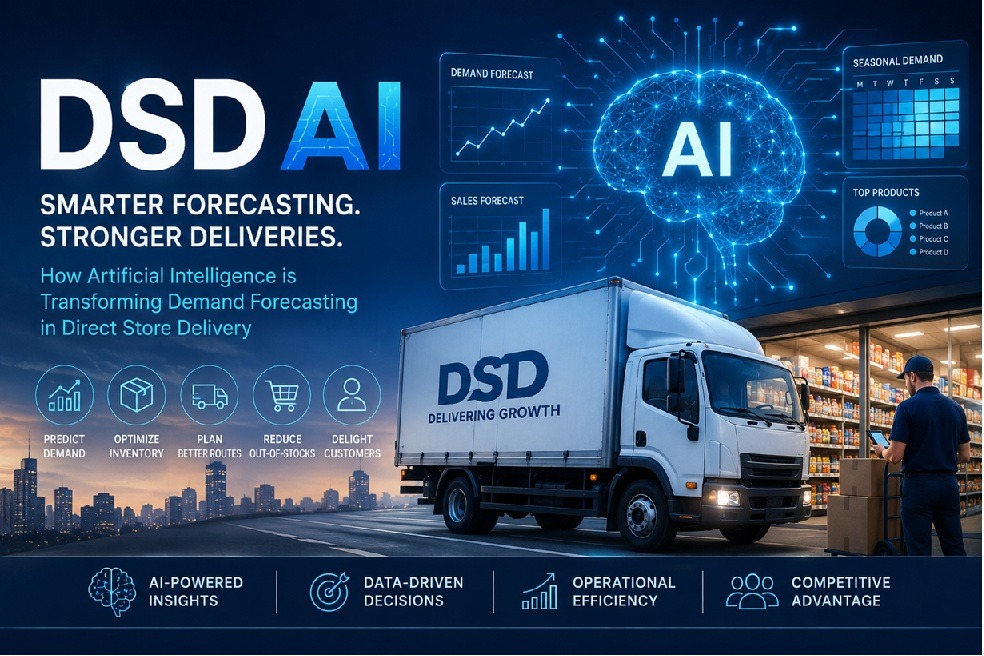
DSD AI for Demand Forecasting: A Competitive Advantage for Modern Distributors
The distribution industry is entering a new technological era where Artificial Intelligence is no longer limited to analytics dashboards or experimental tools. AI is rapidly becoming embedded in the operational systems that distributors use every day, transforming how products are sold, stored, delivered, replenished, and financially managed (see an earlier article on this). This article is the first in a three-part series exploring how AI is being integrated into the core systems that power modern distribution operations. In this first article, I will focus on how DSD AI systems are improving demand forecasting, route efficiency, inventory planning, and customer service.
What Is DSD AI?
DSD AI refers to the integration of Artificial Intelligence capabilities into Direct Store Delivery systems. Traditional DSD software mainly focuses on recording transactions, processing deliveries, managing routes, and handling sales operations. AI takes these systems much further by allowing them to analyze data, recognize patterns, predict future behavior, and generate intelligent recommendations automatically.
The Evolution of Forecasting: From Reactive to Predictive
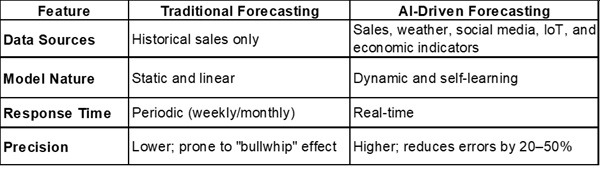
Traditional time-series models for sales forecasting typically assume stationarity and linearity, which fail to capture the “black swan” events or sudden market shifts common in today’s economy. AI-driven models, however, adaptively learn from continuous data streams, recalibrating parameters to evolving conditions.
The Importance of System Integration
The true power of DSD AI appears when it is integrated with other distribution technologies, including:
- Warehouse Management Systems (WMS)
- ERP systems
- Route accounting software
- Retailer portals
- Inventory management systems
- Sales and merchandising applications
Integrated systems enable AI forecasting to automatically influence purchasing, replenishment, route loading, inventory transfers, and delivery planning. This creates a more connected and intelligent distribution environment where operational decisions are based on real-time information rather than assumptions.
Benefits of AI DSD Integrated System
Better Inventory Management: Inventory accuracy is a major challenge in distribution operations. Overstocking creates unnecessary carrying costs and expiration losses, while understocking causes lost sales and dissatisfied customers. DSD AI helps distributors balance inventory more effectively by continuously learning from real-time operational data.
Improved Route Efficiency: Transportation costs continue to rise across the distribution industry, making route optimization more important than ever. Traditional DSD routes are often built around fixed schedules and static assumptions. DSD AI allows distributors to adjust operations based on predicted demand levels dynamically.
Reduced Out-of-Stocks and Better Customer Service: In a DSD operation, empty shelves immediately translate into lost sales opportunities. Retailers expect distributors to maintain consistent product availability, especially in highly competitive product categories. DSD AI improves store-level replenishment by forecasting demand at the customer level rather than relying solely on company-wide averages. For example, AI may recognize that a store near a beach requires larger beverage deliveries during holiday weekends, while another urban location experiences stronger weekday demand.
This allows distributors to improve shelf availability, reduce emergency deliveries, and strengthen their relationships with retailers.
Better forecasting also helps sales representatives become more proactive by identifying trends and recommending products based on predicted customer needs.
Faster Response to Market Changes: Consumer demand can change rapidly due to weather, economic conditions, local events, inflation, or changing buying habits. Traditional forecasting models often respond too slowly because they rely heavily on historical data. DSD AI continuously updates forecasting models as new operational data becomes available. This allows distributors to respond faster to:
- Seasonal demand spikes
- Supplier shortages
- Sudden sales increases
- Weather-related demand changes
- Promotional activity
- Market disruptions
Instead of reacting to problems after they appear, distributors can anticipate operational changes earlier and make adjustments proactively.
Conclusion
DSD AI is transforming Direct Store Delivery operations from reactive systems into intelligent distribution platforms that can predict demand, optimize inventory, improve routes, and enhance customer service. By embedding Artificial Intelligence directly into DSD systems, distributors gain greater operational visibility and the ability to make faster, smarter decisions in increasingly competitive markets.
At LaceUp Solutions, we explore how technology transforms distribution, from warehouse management and route optimization to digital sales enablement. Subscribe to the LaceUp Blog for weekly insights on wholesale growth, innovation, and the future of logistics. For more information, please get in touch with us to learn about our solutions.
I hope this article have been helpful. I will continue to post information related to management, distribution practices and trends, and the economy in general. Our channel has a lot of relevant information. Check out this video on How AI will realistically Help Your Company.
Sorry, the comment form is closed at this time.