

DEX/EDI for DSD: How Electronic Integration with Retailers Eliminates Manual Order Errors
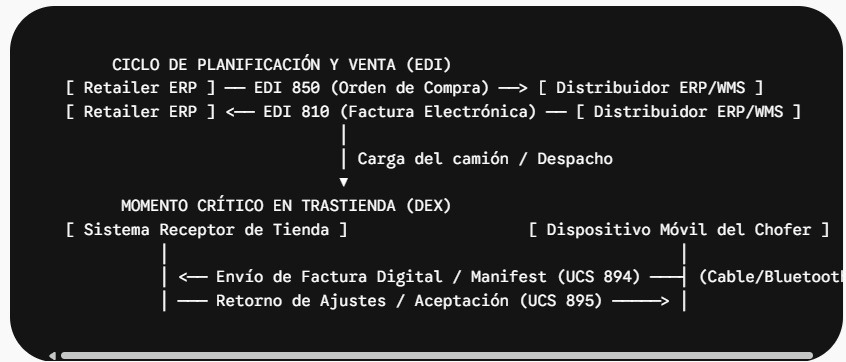
En el modelo de Direct Store Delivery (DSD), la trastienda de un supermercado o gran superficie es una zona de fricción constante. Históricamente, el proceso de entrega dependía de facturas impresas, lápiz, conteos manuales y digitación en el sistema del minorista. Este método no solo genera demoras de 40 a 60 minutos por parada, sino que alimenta una cadena interminable de discrepancias, notas de crédito no conciliadas y facturas retenidas. Para eliminar estas ineficiencias, la industria de consumo masivo (CPG) y retail estandarizó dos pilares de intercambio electrónico de datos: DEX (Direct Exchange) en el punto de entrega físico y EDI (Electronic Data Interchange) en el ciclo comercial back-office. In this article, I cover what DEX/EDI for DSD actually does, what manual entry is quietly costing distributors who haven’t made the switch, and what a distributor should look for in a system built to handle it.
WHAT DEX/EDI for DSD ACTUALLY DO AT THE BACK DOOR
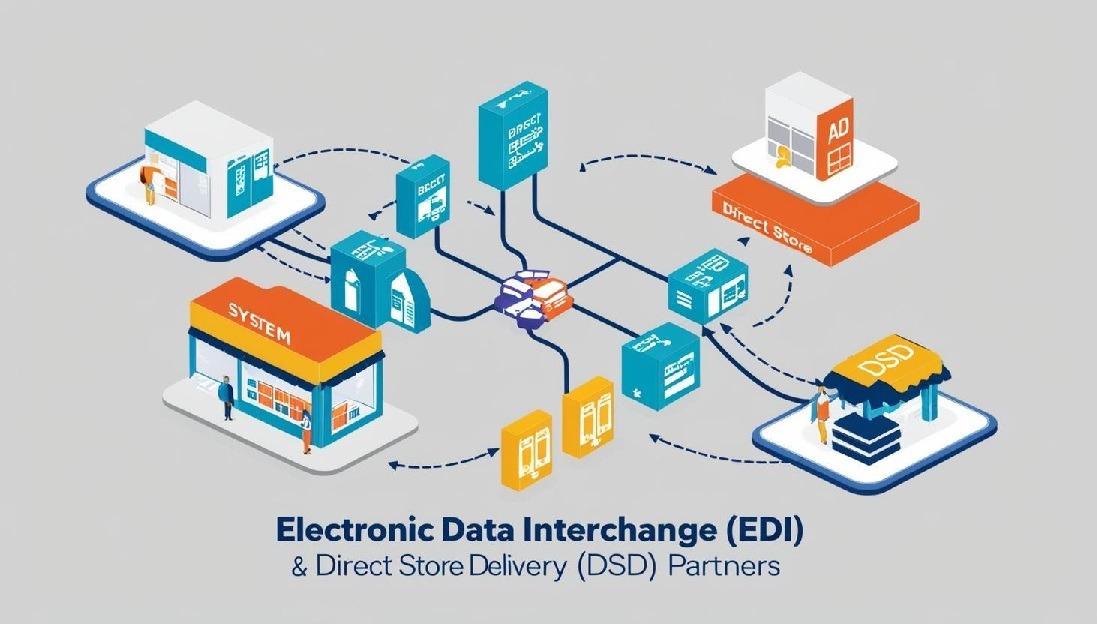
The DEX protocol is a data exchange protocol used primarily in the direct store delivery industry, allowing route sales representatives to transfer invoice and product movement data directly to a retailer’s system at the point of delivery.
DEX is the delivery-side half of a broader shift. Electronic data interchange more broadly covers the electronic exchange of purchase orders, invoices, and payment data between a distributor’s system and a retailer’s system, whether that exchange happens at the back door via DEX or further upstream through standard EDI transaction sets for ordering and invoicing.
WHAT MANUAL ENTRY ACTUALLY COSTS
A manually keyed purchase order typically takes 10 to 15 minutes of staff time to enter correctly, assuming nothing gets mistyped. A single wrong quantity or price on a purchase order can trigger overstocking, understocking, or an invoice that doesn’t match what was delivered; any of those can become a formal dispute with the retailer weeks later, long after anyone remembers the details of that delivery.
The chargeback exposure is where this becomes a real line item. Retailer chargebacks for EDI compliance errors and mismatched invoices typically run 1% to 5% of gross invoice value for vendors who aren’t actively managing the process, and individual per-incident fees for a wrong ASN or a labeling mismatch commonly run $25 to $500 each. For a distributor running meaningful volume into two or three major chains, that is not an occasional annoyance. It is a predictable percentage of revenue quietly leaking out through the back door, invoice by invoice, month after month.
THE RETAILERS THAT MAKE IT NON-NEGOTIABLE
For distributors selling into major grocery chains, this stopped being optional some time ago. Large retailers increasingly treat EDI integration as a baseline vendor requirement rather than a preference, and vendors who cannot exchange invoices and purchase orders electronically are frequently excluded from onboarding altogether, regardless of how strong the product or the pricing is. A distributor evaluating a new retail account today needs to know, before the conversation goes any further, whether their system can actually transact the way that retailer requires. This is also where the payment-speed argument matters most. Retailers process electronically reconciled invoices faster than disputed paper ones, because there is no discrepancy to research before releasing payment. A distributor moving from manual entry to full EDI integration is not just cutting errors; they are shortening the gap between delivery and getting paid, on every invoice, every week.
WHAT TO LOOK FOR IN A DEX/EDI FOR DSD SYSTEM
Not every route accounting system handles this well, and the gap between “supports EDI” and “makes EDI effortless for a driver at a back door” is where distributors actually feel the difference.
- Native DEX support on the device drivers already carry: A system that requires a separate dedicated DEX unit adds cost and one more piece of hardware to keep charged and working. DEX handled through the same Android device running the route app is simpler to deploy and simpler for drivers to learn.
- Support for the retailers you actually sell to, not a generic claim: “EDI-capable” means little without knowing whether the system has been proven against the specific transaction sets and retailer requirements for the chains on your route list today.
- Two-way exchange, not just outbound invoicing: The strongest implementations handle purchase orders coming in electronically as well as invoices going out, so order accuracy improves on both sides of the relationship, not just at the point of delivery.
- Real-time error flagging before the driver leaves the dock: Catching and correcting a mismatch in the moment costs nothing. The same mismatch discovered during reconciliation two weeks later costs a chargeback and a research project.
- A direct line into route accounting and the ERP: EDI integration that dead-ends in a standalone tool still requires someone to re-key the results into the system that actually runs the business, which defeats most of the point of automating it in the first place.
CONCLUSION
EDI integration is not a technical detail buried in a systems requirements document. It is the difference between a driver who clears a back door in two taps and one who stands there for ten minutes while a receiver keys in a paper invoice by hand, and between a distributor who gets paid on schedule and one who chases chargebacks for mismatched invoices every month. For any distributor selling into large-format grocery retailers, this has moved from competitive advantage to basic cost of entry, making DEX/EDI for DSD a necessity.
At LaceUp Solutions, our DSD Route Accounting Software and DEX EDI solution let drivers exchange invoice data with major retailers in seconds using the same Android device they already carry, with two-way electronic order and invoice exchange that flows straight into route accounting. Subscribe to the LaceUp Blog for weekly insights, or contact us to see how LaceUp can help your operation get ahead of this year’s Q4 before it gets ahead of you.
I hope this article on DEX/EDI for DSD have been helpful. I will continue to post information related to management, distribution practices and trends, and the economy in general. Our channel has a lot of relevant information. Check out this video on How To Become a Walmart Vendor.
Sorry, the comment form is closed at this time.