

DSD Peak Season Planning: How to Avoid Year-End Chaos
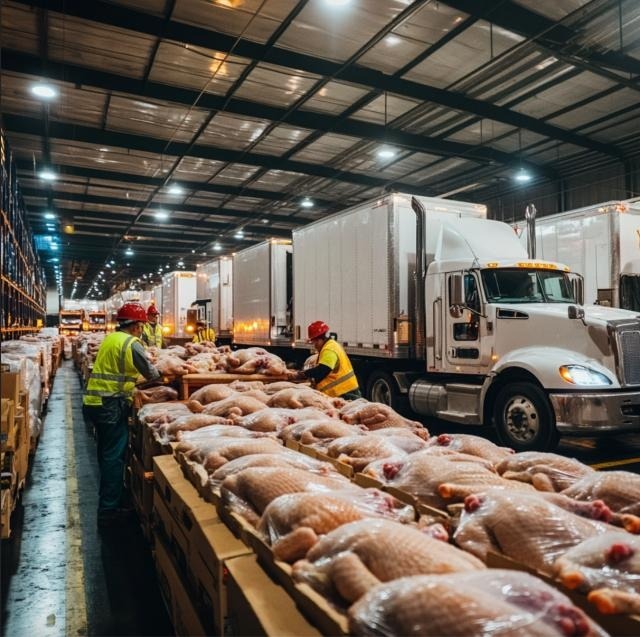
For Direct Store Delivery (DSD) operations, the fourth quarter represents both the largest revenue opportunity of the year and the most dangerous operational hazard. Surge demand across beverage, food, and fast-moving consumer goods (FMCG) collides with holiday traffic congestion, congested loading docks, strict receiving windows, and driver shortages. Without a structured plan, year-end operations devolve into runaway overtime, retail out-of-stocks, driver burnout, and service failure fines. In this article, I cover the basics of managing DSD Peak Season Planning: why Q4 breaks operations that run fine the rest of the year, what the actual cost of getting caught flat-footed looks like, and the specific things a distributor needs to lock down before Q4 hits rather than during it.
The 4 Critical Bottlenecks to Consider in a DSD Peak Season Planning
| Challenge | Route Symptom | Business Impact |
| Dock Congestion | Dwell times exceeding 45–60 minutes per stop. | Hours of Service (HOS) violations, missed afternoon windows. |
| Cube & Weight Volatility | Trucks hitting volume limits halfway through a planned route. | Product left at the depot, rejected drops, costly shuttle runs. |
| Backroom Friction | Overwhelmed retail receiving staff unable to check in goods. | Extended cycle times, stranded assets on the store floor. |
| Driver Fatigue & Turnover | Compounding physical stress in cold, congested conditions. | Last-minute absenteeism, safety incidents, service disruption. |
Move from Static Master Routes to Hybrid Dynamic Dispatch
Fixed “master” routes (e.g., servicing Store A every Tuesday and Thursday at 9:00 AM) inevitably break during peak season because demand variance outstrips static vehicle capacity.
- Macro-Territory Rebalancing: Six to eight weeks prior to peak, recalculate core territories to absorb 25% to 60% higher order volumes per account.
- Corridor-Based Dynamic Sequencing: Maintain familiar driver-account relationships within bounded micro-territories, but let routing optimization software dynamically reorder daily stops based on predictive traffic patterns, variable truck weights, and tight retail time slots.
Decouple Delivery from Merchandising (Drop & Go)
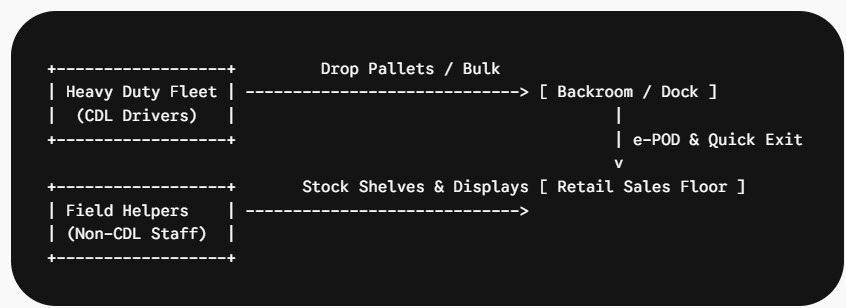
Having high-wage, commercially licensed drivers wait around store aisles to stock shelves during the holiday rush is an operational sinkhole.
- The Split Operation Model: Shift heavy-duty delivery trucks strictly to dock-to-dock drops with automated electronic Proof of Delivery (e-POD).
- Dedicated Merchandiser Units: Route separate, agile merchandising teams in smaller fleet units or passenger vans to handle aisle stocking, display builds, and inventory rotation behind the drop.
- The Operational Dividend: Truck turnaround drops by 30% to 40%, keeping equipment moving and freeing capacity for secondary afternoon replenishment runs.
Lock In Off-Peak Receiving Windows Early
Large retailers and grocery chains restrict receiving hours during peak periods to clear their aisles for customer traffic. Proactive coordination is essential:
- Secure Off-Hour Deliveries: Negotiate early-morning (4:00 AM – 7:00 AM) or late-night delivery slots with key accounts in exchange for guaranteed priority replenishment and early shelf access.
- Automate Real-Time ETA Broadcasts: Feed dynamic, GPS-backed arrival estimates directly to retail inventory managers via automated SMS, email, or EDI updates so receiving staff have pallet jacks and forklifts staged before the driver parks.
Don’t Forget the Drivers when Doing DSD Peak Season Planning
Drivers are particularly critical in DSD because they often perform much more than transportation. They deliver, invoice, collect payments, manage returns, interact with customers, and sometimes merchandise products. Peak season increases every part of that workload. Distributors should identify staffing gaps early, cross-train employees where practical, establish backup coverage, and simplify driver workflows as much as possible.
This is particularly relevant given the continuing difficulty DSD companies face recruiting qualified drivers. Our recent LaceUp article on Solving the DSD Driver Shortage examines how route technology can reduce dependence on additional headcount during periods of operational pressure.
Conclusion: Plan the Peak Before the Peak Plans You
DSD Peak Season Planning is therefore not about preparing to work harder in November and December. It is about designing the operation so that higher volume can flow through the business without creating chaos. The best holiday season is not the one where everyone works until midnight to get the trucks out. It is the one where the additional volume was anticipated months earlier—and the operation was ready when it arrived.
At LaceUp Solutions, our WMS and DSD Route Accounting Software are built to give distributors the real-time inventory visibility, route capacity, and digital settlement they need to handle Q4 volume without the chaos. Subscribe to the LaceUp Blog for weekly insights, or contact us to see how LaceUp can help your operation get ahead of this year’s Q4 before it gets ahead of you.
I hope this article on driver shortage have been helpful. I will continue to post information related to management, distribution practices and trends, and the economy in general. Our channel has a lot of relevant information. Check out this In Depth WMS Walkthrough video.
Sorry, the comment form is closed at this time.