

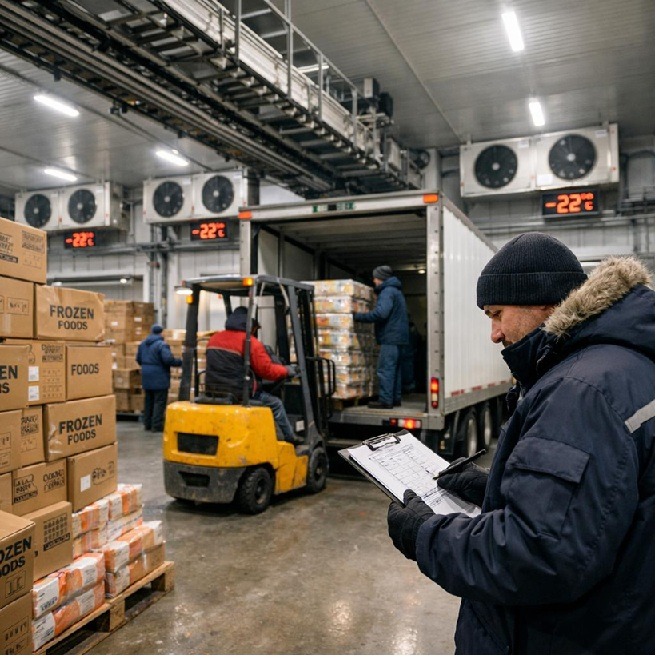
Cold Chain Distribution: Why Using Technology Is Essential for Frozen Food DSD
Distributing frozen foods, premium dairy, ice cream, and frozen entrées via Direct Store Delivery (DSD) introduces some of the tightest logistical parameters in the supply chain ecosystem. Unlike ambient distribution, or even chilled health and wellness lines where minor inventory delays affect shelf life, frozen logistics operates on a thin line where failure is measured in absolute physical product degradation. In this article, I cover what actually has to change in the warehouse, on the truck, and in the systems to run a Cold Chain Distribution profitably.
The Cold Chain Distribution Landscape In 2026
A cold chain is an uninterrupted series of refrigerated production, storage, and distribution activities, along with associated equipment and logistics, that maintain a desired low-temperature range to preserve the quality and safety of a product.
The category is expanding fast. Global cold chain distribution is projected to grow from roughly $497 billion in 2026 toward $1.48 trillion by 2035 and the frozen segment (the -18°C to -25°C range that covers ice cream, frozen entrées, and frozen vegetables) is the fastest-growing piece of it, expanding at a projected 14.7% compound annual rate as demand for frozen and ready-to-cook meals accelerates. Distributors who build reliable frozen and dairy capabilities now are positioning themselves for the segment of food distribution with the steepest growth curve over the next decade. Distributors who treat cold chain distribution as an afterthought are positioning themselves for the segment with the steepest write-off curve instead.
The High-Stakes Complexity of Cold Chain Distribution
Managing cold chain distribution introduces unique structural strains that demand specialized software
controls. The operational friction typically manifests across three core variables:
- Multi-Zone Fleet Constraints: Frozen entrées require a stable 0°F (-18°C) climate, whereas ice cream lines demand deep-freeze conditions of -10°F to -20°F. DSD operators must manage complex multi-zone trucks where changing spatial allocations directly impacts fuel draw and refrigeration performance.
- High Frequency Door Openings: A typical grocery delivery route involves numerous retail stops. Every time a driver cracks open the rear truck doors at a receiving dock, ambient air surges in. Without high route speed and strict loading patterns, inner-zone temperatures will spike.
- Immediate Receiving Bay Validation: Supermarket receiving clerks conduct rigorous audits of frozen deliveries. If a shipment shows external condensation or registers a few degrees out of tolerance on an infrared scanner, the entire case or pallet is instantly rejected, driving up costly returns..
Tying Field Logistics Directly to Warehouse Management
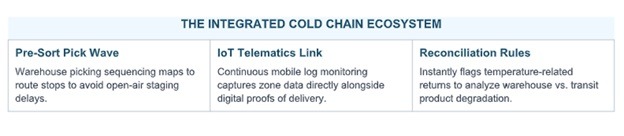
To minimize the time frozen products spend exposed to ambient staging areas, the warehouse management system (WMS) must communicate directly with the delivery route fleet layout. Picking teams cannot simply compile product orders in random sequence. Instead, advanced route-to-truck mapping ensures that inventory destined for the final retail stops is loaded deep into the front of the trailer, while the earliest route drop-offs sit immediately adjacent to the loading gates.
This structural discipline dramatically reduces stop-by-stop hunt times inside sub-zero environments. By linking this backend warehouse coordination with mobile tracking terminals, companies can precisely analyze how delivery velocity affects cargo stability; you can examine the underlying math governing these routing loops in The Role of AI in DSD Route Optimization. Combining ultra-precise warehouse ordering with optimal route tracking results in a highly defensive operational shield protecting temperature-vulnerable margins.
Securing Regulatory Compliance via Digital Chain of Custody
Modern food safety laws require absolute accountability. Under sweeping global trade regulations, frozen food brand networks are legally obligated to prove that their temperature-controlled inventory never cross-contaminated or drifted into unsafe heat thresholds during transit. Relying on manual driver check sheets to log temperature compliance values is no longer sufficient to meet rigorous audit requirements. Implementing automated tracking infrastructure that anchors into established cold chain data compliance protocols provides the missing link. By feeding continuous IoT telematics directly into your mobile DSD invoicing tool, your field teams build an immutable electronic log of environmental stability, eliminating regulatory penalties while protecting enterprise brand value.
Conclusion
Operating a sub-zero Cold Chain Distribution network leaves no room for operational error. Whether handling fragile gourmet ice cream lines, multi-category dairy items, or fast-turning frozen entrées, margin safety depends entirely on maintaining the cold chain intact. By embedding automated route optimization alongside smart warehouse-to-truck pick sequences, modern brands are eliminating cargo shrink and invoice friction. Transitioning to a fully integrated mobile DSD platform turns temperature-sensitive distribution from an administrative challenge into a powerful engine for reliable, high-volume growth.
At LaceUp Solutions, our Warehouse Management System and DSD Route Accounting Software are built to give distributors zone-aware picking, digital temperature documentation, and real-time route visibility for frozen and refrigerated categories.. Subscribe to the LaceUp Blog for weekly insights, or contact us to see how LaceUp can help your operation close every route with confidence.
I hope this article have been helpful. I will continue to post information related to management, distribution practices and trends, and the economy in general. Our channel has a lot of relevant information. Check out this video on a A Practical Guide for AI Agents for Distribution.
Sorry, the comment form is closed at this time.